estos son los bosques donde los Trasks decidieron erigir su casa en 1881. aquí erigieron una mansión estilo reina ana que es un sueño de henry james... yo vivo en una casita como la de Jo en Mujercitas, de luisa may alcott. una noche me fui a dormir y sentí que algo me caminaba por el pie pero me dormí igual, y a la mañana lo descubrí. son unas primas yankis de las vinchucas
llego de noche a gainesville, florida, y rápidamente me siento a gusto, por la amabilidad de mis hosts y porque los alligators son ubicuos y quizás llegue a ver a alguno pasar junto a mi habitación de hotel, pero está oscuro -ellos son enormes. acá cerca es el pantano Fakahatchee, donde mora la Orquidea Fantasma que comparten Charlie Kaufman y Susan Orlean; de acá es el pastor que hizo a mi amiga Ghada vestirse de redneck en Iowa (es un vecino más que se pasea en Cadillac). para llegar acá, pasé por seguridad en JFK detrás de Kim Kardashian -sus botas de cuero taco aguja over-theknee en la bandejita pre-moi-, en el avion viajé junto a una hipóstasis del Coco Basile en forma de banquero de citibank que me prestó su ipad para ver sus versiones pirateadas de Cazadores de Utopías y Montoneros Una historia, de Andrés di; antes de combinar a Gainesville un argentino de bigotes, personal del aeropuerto, me ayudó a destrabajar mi maletita y resultó ser un colimba de Infantería Marina durante 76-77, me contó que estaba en Puerto Madryn y lo llamaron para derrocar a Isabel y de compañeros de colimba muertos por guerrilleros solo por ser colimbas y también vio cómo tiraban de los helicópteros a los cautivos encapuchados al río, en Zárate. en el avión, leo sobre la maravillosa voz, que no escuché, de la soprano rusa Marina Poplaskaya, la nueva diva de la ópera -el New Yorker cubre su concierto con Baremboim en el Colón- y me encanta usa pero quiero, necesito 1. dormir 2. volver a buenos aires!
pela Pola Oloixarac reporteira na Silicon Valley pra Revista Alfa
traduçao: Ronaldo Bressane
Na varanda de uma mansão à beira do Oceano Pacífico, em uma das áreas mais sofisticadas de São Francisco, um mago anão de largas barbas brancas conversa com um homem de óculos cuja roupa parece um computador — o assunto é uma professora que provou que seu papagaio pensava. Freakolândia? Nada disso. O primeiro sujeito é James Randi, o mágico que desmascarou o vidente Uri Geller, uma espécie de superpadre Quevedo dos anos 70; o segundo é o inventor Steve Mann, conhecido como o “primeiro ciborgue” por seu trabalho com câmeras adaptáveis ao corpo; a professora é Irene Pepperberg, autoridade de Harvard em cognição animal. Ali por perto há uma biblioteca com o alfabeto essencial dos mestres da ficção científica: Isaac Asimov, J.G. Ballard, Arthur C. Clarke. Do terraço, o olhar se perde em uma vista magnífica do Exploratorium, o museu de ciências onde Kim Novak e James Stewart passearam para as lentes de Alfred Hitchcock em Um Corpo Que Cai. Dispersos pelos três andares da residência, papeando e bebendo champanhe, esquisitões multidiplomados se misturam a homens de turbante, nerds entusiasmados e milionários californianos — entre eles está ninguém menos que Larry Page, fundador do Google. O dono da mansão é Peter Thiel, criador do PayPal, empresa pioneira na transferência financeira pela internet e um dos primeiros investidores do Facebook. Tudo parece fantasioso. Mas está acontecendo. Aqui, agora.
\\// The University of Iowa’s International Writing Program and Granta present:
One-Way Street: An Evening with Pola Oloixarac, Billy Kahora, and H.M. Naqvi
Sunday, November 14th, 2010 6:00 pm BookCourt 163 Court Street (between Pacific & Dean) Brooklyn, NY
The IWP and Granta come together in New York City to celebrate the affiliations of three of this year's IWP's writers-in-residence with the UK literary journal/giant:
Pola Oloixarac (Argentina), was recently named one of the "Best Young Spanish Language Novelists," and will be featured in the forthcoming issue, release on November 11th.
Billy Kahora (Kenya), Editor of the journal 'Kwani?,' has published a number of pieces for Granta online.
H.M. Naqvi (Pakistan), will also read, author of the novel 'Homeboy,' recently shortlisted for the $50,000 DSC Prize for South Asian Literature
Please come out to the event, or tell your friends to (!), an early Sunday evening marking the literary crossing of international proportions... RSVP!
It's the last Sunday of November. I have been feeling rather down today -- perhaps I am just tired from the previous night's frenzied partying -- that not even a splendid hay ride in a beautiful Iowan farmhouse can mitigate it, and everything to me now seems to run with forbidding shadows. Some things are even hateful in varying degrees. The full capacity of this cafe, for example, when on ordinary days I delight in seeing the constant traffic of interesting faces. And the fact that it's cold outside. There's also my use of the word "mitigate," which I find utterly pretentious, and I hate it. So is my use of the word "utterly." It seems that in this down time, I have learned how to perfectly cannibalize myself with little irritations.
I use a lot of excuses, don't I.
The real reason is the fact that there is something inevitable that stares me at me now: going home. How do you go home after Iowa? After the International Writing Program? But I am, all of us are. We are leaving in barely three weeks, and I don't think I'm ready to go back to my old life just yet. And yet, there are already missives from and of home that are reminders of this inevitability: emails from family and friends, announcements from work, and the constant moans by O Thiam Chin every single day that this is his "last Friday in Iowa City," his "last Saturday in Iowa City," his "last Sunday in Iowa City." I keep mum, always in that posture of denial, but in my head I tell him: "I am counting out my last days, too, and I am sad."
Amilcar is already gone. So is Najwan. You can see how sad most of us are. We try to hide this silly sentimentality, of course, with smiles and small talk and good cheer and drunken parties -- and sometimes, for some of our men here in the IWP, with a slinky black dress or women's lingerie for a Halloween night's excuse to let our hair down. Last night, at the ghoulish gathering at the Merinos', you could feel that pull for camaraderie among many of the writers in the IWP. There was an acknowledgment in the air that we were indeed counting out our days, that we were saying our drawn out goodbyes in whatever form we want them to take, that we were probably not going to see each other again but that we were glad that, for more than two months, we were blessed with their friendships, their capacity for taking us into their lives and making us part of them.
I will miss Ghada's smile, for example, and her constant protests about her cheerfulness. I will miss Pola's wildfire presence, the way she comes into every room and commands everybody's attention. I will miss Touche's playful gravity, and his conviction that he is always the most beautiful person in the room. I will miss Andrea's sudden bouts of laughter, and his mission to photograph himself in every single spot in the United States. I will miss Mr. Kim's quiet and calming presence -- and his totally terrifying Jigsaw Halloween mask. I will miss Edgar and the way he walks around with the security blanket that is his bag. I will miss Coco's quiet air, the way she talks to you like you are the only person in the room. I will miss Solvi's tallness -- and his wig and lingerie. I will miss Christopher's anecdotes, and the animated way he tells them. I will miss Chandrahas' impeccable sartorial sense and his capacity for elegantly working the room. I will miss Milosz's secret rock star wish and his electric guitar. I will miss being a visitor in Marjia's universe, and the way she can belt out every single song in The Rocky Horror Picture Show. I will miss Laura's delightful accent, and her Gabriel. I will miss Turusbek's dancing, and his booming voice. I will miss Billy’s hand gestures when he talks passionately about something. I will miss Farhad's Cambridge accent, and the whiplashing wit he carries around with him like a weapon of mass distraction. I will miss Michael's giggles and his mission to see birds, of all sorts. I will miss Thiam Chin's hyper nature and his pickiness. I will miss Phoenix's gushing about film. I will miss H.M.'s swagger, and his allergy to the afternoon sun. (Or just the sun, period.) I will miss Amilcar's silence, the way his smile seems to just say everything. I will miss Hinemoana's quirkiness and deep soul and Halloweena costume. I will certainly not miss Ismail's milkshake addiction, and his obsessive fascination for Twinkies and bookstores. I will miss Albana's groundedness, the way she makes you feel at ease around her instantly. I will miss everything about David, that darling man. There are the other writers, of course, all thirty-eight of us, each with a piece of memory of each other. Truth to tell, we only have these scant impressions of each other to work with, because two and a half months are never really enough to know anybody. But it is enough to say that given the little time that we've had, we gave the world to each other -- and made Iowa City in the beautiful autumn of 2010 an impossible place and time to forget in all our lifetimes.
Due to my uncanny resemblance to the American politician, author, speaker, singer, and member of the GOP, Governor of Alaska Sara Louise Palin, I'm considering dressing like her for this Halloween in Iowa, my first all hallows eve in The Land of the Free. I can certainly do the hair, and sport her light glasses and a bright colored 2 piece (perchance a Hockey Mom tee when things get boozy); the rest is, as in politics, entirely debatable as whether I could go for Miss Alaska and win, too. The thing is: not enough. I need a baby prop. I'd like to go as Sarah Palin holding little baby Trig, her down syndrome offspring who comes with her to the political rallies (see below), and it's not easy, as some could have wrongly guessed, to find small baby props featuring down syndrome here in Iowa. Ismail from Nigeria is suggesting Andreas from Indonesia to play my son, and yesterday, I have chased Andreas at the reception at US Bank asking him wherther he would like to be my son (grandson, alas, but I'm not exaggerating accuracy, I'm Palin f'christ sakes). Andreas finds the idea so horrific that it's good. But he hasn't consented to our common genes yet. A decision needs to be made in the coming hours... oh time, oh witches.
I'm becoming a Muslim (*) and my friend Ghada, to the left, is taking me under her wing this is the fundamental style when you go to a rodeo on September Eleven, and there are priests in Florida burning Qurans. The word from the organization was "we can't protect you", and Ghada thought that, worst case scenario (burning her alive?), it would give her something to write about. A terrorist strategy ensued: Here's Ghada with my NASA cap + American Apparel hoodie... suddenly a redneck in style!
alas, we wanted to dance, and hence, the prospect of a gay bar (the one and only in iowa city?) was our immediate Grial. lovely Farangis practically threw away ahmadinejad just by swinging her hips the Iranian revolution and this young man approached us, to greet us for my conversion into Islam, style American dollars protruding from his zunga, he squealed: You guys! You were last night at Jimmy Sandwich, I work there! Veggie club, right??
(*) the image was cut to support the cause of the Iconoclasts
by Pola Oloixarac for Iowa Library City Library Reading: IWP Panel Series
The matter of comedy has deserved very serious treatment throughout the life of books. This of course includes cinema as well, and I'd like to share with you a 20th century definition, by the American comedian Woody Allen.
The horse, channeling Alan Alda's voice, brings it forth: If it bends it's funny, if it breaks it isn't. Woody was hired to depict this grand man, yet by making a comedy out of a comedian, he breaks the pact, and ultimately gets fired. We may suppose Alan Alda was asking for the bending quality of representation, to get the kind of self he was looking for. Instead, in Woody's book, the definition reverts: If it breaks it's funny, if it bends... well, it just makes Alan Alda happy, and where's the fun in that?
Mutable, ever-changing definitions of funny can vary violently across eras and authors, can twirl against each other and even take themselves as their laughable target. However, the viral power of comedy holds a particular strain, satire, whose almost romantic build-up is closer to timeless epic. For satire is the genre of the little people against the giants (or the place where Giants and little people live together, as in Swift's Gulliver’s Travels). It's also the classical genre for narrating the rebellion of women: Shakespeare's comic heroines and Cervantes' difficult ladies are escaping marriage, are playing with men's minds, and trying to have a life (if not a room) of their own. Satire has also starred in roles as morality's bravest ally, more often than it has befriended libertines. Before society grew accustomed, or trained, in finding aesthetic pleasure in the tale of its own perversities and excesses (that is, before the trend of social realism came to embed the moralfinesse of the culturati), satire was probably the most powerful technology for twisting the arm of the contemporaries. You could only get away with your pungent criticism to society by way of bringing tones of fun. You needed to make them laugh to get your point across. Satire, and her mischievous little sister, Parody, have gone a long way, and have always shaped themselves by following the contours of power –in order to break it. They are experts in finding the vulnerabilities of power and breaking into it, filling the gaps with new meaning. Moreover, as a master satirist may attest, only imminent breakage is proof of worthy writing. Thomas De Quincey considers, in Murder as one of the fine arts, that “and against Locke's philosophy in particular, I think it an unanswerable objection (if we needed any), that, although he carried his throat about with him in this world for seventy-two years, no man ever condescended to cut it.”
Yet, with all its manifold richness, there is method in its madness. Take a look at a classical Marx brothers bit. A molecule of their humour shows the gap, the cut between worlds. A says give me a break! And B pulls a brake out of his pocket. Comedy shows the gap between language and the world, between ego and its mirrors. It shows that there's nothing natural in what we take for granted, and that the consolidated powers we've grown to consider part of the natural landscape are artificial, and therefore, because their engineered whims are reflections of men, can be bitterly comical. It comes to show that the norm is made of disjunctures, mistakes, discrepancies, the ruins of old wars that have become naturalized. And then suddenly you are part of the scene, staring at the invisible carrot that had been hanging right between your eyes. By breaking the pact with the status quo, comedy ultimately reveals the political and ideological.
But perhaps this is an all-too-romantic definition, a hard one to maintain these days. Because today, the ideological norm is to be happy. Cheerfulness is encouraged, and spiritual darkness frowned upon. Laughter is even part of the medical discourse, and a saturnine character, a sign that something is wrong. Laughter (like sex) is empowering, the sign of a healthy, successful, morally valuable person; sadness is bad for you (and probably causes cancer). Comedy is, therefore, the underlying ideology, the global script with the mandate. The proliferation of comedies of all sorts gives us an idea of a certain soothing quality of comedy that blatantly flatters the hidden rules that we don't question, to help people live with a number of acceptable problems and to provide them with a script of possibilities. Romantic comedies, office comedies, teen comedies, terror comedies, are the hysterical flavors of the American ideology that always need to turn things into a smile, into a “positive” attitude.
At the same time, our times favour the proliferation of a newborn class of humour and communication. Parodies: we see them all over, breaking into previous representations, breaking out into viral swarms: a moving, living form that takes on the electronic lives of online joie de vivre. Walter Benjamin (born under the sign of Saturn, as Susan Sontag described him) held that, in the era of massive reproduction, “copy” meant the loss of the aura; that mass-ification of works of art ultimately kills whatever traces of the author lingered in them. Walter Benjamin was, of course, making a critical point about American capitalism, and it's not difficult to see how the battle turned out. Eventually, copy seems to have gained an aura, by way of parody. Every person could repeat, mimic, the former representation, and hence attach his or her own subjectivity to the parodied object. So, OK, the Author with capital letters got lost in copy, but now the parody-maker could turn into an author by the thousands. In a way, it's as if parody had taken a Greek turn. Aristotle defined tragedy as the opposite of comedy, as the ongoing staging of known facts that happens to noble people. So people in Greece went to the theater to see Oedipus, and everybody knew how the story went, everybody knew he was going to turn out blind, yet they would scream to the actors in the stage: “Don't go there Oedipus! She's you mom!” only to watch how the dreaded ending inevitably, took place, to the repeated shock and awe of the viewers. And the same happens with the most widely watched genres of our times: pornography and parody. In parody, we see the endless list of people repeating patterns, and taking pleasure at mocking others. In pornography, we see the on and on unfolding of the same events, the infinite series of imperceptible variations on the same mythical scene, drawn to the limits of exhaustion, until the crucial ending: inevitably crowned by the money shot. Pornography admits no surprises; and parody, no real subjectivity. There might be juissance, but no further attempt against the ruling powers.
So, the question I'd like to ask you and myself on the topic of satire's global reach could be: how do we keep comedy a critical endeavor, without losing a sharp edge? Is it possible to be defiant to powers without being an intellectual clown? Or: which is the all encompassing narrative that hasn't been hacked by literature? Is it possible to create “pure” satire, to work directly on the level of the syntax, to operate directly on the signs –in order to break them?
In my novel, “The Wild Theories”, there's a special attack designed to hack Google Earth. The characters throw a party to launch their attack, and include specific instructions for anyone who wants to partake in the breakage. (So as to avoid legal charges of inciting criminal behavior, I, as an author, am one of the guests to the party: I, the author, didn'tmake the hack). The hack is called DNS cache poisoning, and exploits a pretty interesting vulnerability of the architecture of the internet. There is a flaw in this architecture that lies, precisely, in ideology. The openness of the internet, or what we call openness, lies in a few computers that later translate the number of other computers into addresses (IP addresses). These few computers centralize information, and can easily track it: there is a chain of command of the authority that gives each computer one name for all to follow. If the web had, say, a different architecture where all the nodes connected with each other, a true peer to peer connection, information would not be hosted somewhere for scrutiny, the packets would just flow horizontally from person to person. There would not be pyramidal powers that oversee the packets, the subjects. If this were this case, Google Earth would remained unhacked by literature, but this is not the case. Vint Cerf, also known as one of the founding fathers of the internet, has said that this vulnerability is one of the things that the founders didn't see coming and that they can't fix. In the literature of hacking, this flaw had been duly noted on an advisory written by EK and Wari in 1997; however, the exploitation of the flaw, that is, the re-writing of the procedure specifically for the maps came ten years later. DNS cache poisoning is about the poisoning of images. In the technological side, it allows the hackers to fill up the landscape screen with all the sentimental/historic/trivial garbage they can think of; ultimately, the representation of chaos and memory in a fluid present hacked the objective, quantified, all-encompassing narrative of Google.
Our interactions are based on this architecture marked by ideology, which only becomes visible once you break it, once you show the gap. It was ideological matter I was hacking into. Operating on signs, breaking their syntax and meaning, the mutation of literature into informatic code, literally executed by the end of the book, remained political. To poison the tissue of constructed reality had mighty predecessors: the imps, the little creatures of Saxon folk that enjoyed creating chaos in the world of men, and that live on in the root of impish, and in the rootkit of power hacks and every code that revives the ancient promise of language: to utter words, that later happen and become real. In the strain of epic satire, it wasn't merely a way to tag an EPIC FAIL to the biggest giant; it was about words and their meaning, and what ultimately makes writing.
This essay is dedicated to the lovely Clara Masnatta.
Taller de lectura de cuentos estadounidenses (1914-2009)
Coordinado por Santiago Llach
***
Programa
0. Cuento, Estados Unidos
Novela, nouvelle, relato, cuento. La short story: un formato para la invención de un imperio. Los estados anímicos de la unión. La pax filmada. Los founding fathers de la madre literatura.
Cuentos de Katherine Anne Porter, Ernest Hemingway, Billy Faulkner, Francis Scott Fitzgerald.
1. Trenes, autos, teléfonos (1914-1945)
El fin de algo. Los paisajes, las ciudades: la literatura, industria de la nostalgia para una economía de los servicios. Cross a la mandíbula: maquinando la sociedad del espectáculo. Euforia y depresión en la cultura: psicoanálisis de una nación. Los fantasmas que vinieron del sur. Aborto, menstruación y otras cosas de mujeres. Héroes venidos a menos en una democracia policial.
Cuentos de Sherwood Anderson, Willa Cather, Thomas Wolfe, Ring Lardner, Flannery O’Connor, Dorothy Parker, Carson McCullers, Raymond Chandler, Dashiell Hammett.
2. Americanos a las cosas (1946-1975)
Cómo escribir después de Pearl Harbor: estrés postraumático y literatura. La trama descompuesta de un barroco electrodoméstico. Los rusos y los otros: nervios en las centrales de la información. El lado sucio de la Edad de Oro. Literatura de exportación: soldados confederales en las industrias culturales. Una ficción para la televisión. All you need is pop.
Cuentos de Jerome David Salinger, John Cheever, Flannery O’Connor, John Barth, Donald Barthelme, Thomas Pynchon, Isaac Asimov, Ray Bradbury, Kurt Vonnegut, Isaac Bashevis Singer, Charles Bukoswki, Grace Paley, Eudora Welty y Truman Capote.
3. Megáfonos vietnamitas para la derrota cultural (1975-1989)
Literatura del recorte impositivo. Fantasías de la guerra en las galaxias. La contrarrevolución de las costumbres. La guerra fría interior: adicciones, tramas del suburbio y sociedades anónimas de la vida moral. Jesús es mi superhéroe. Relatos de material plástico y chaquetas militares. Personajes viajando por autopistas.
Cuentos de Raymond Carver, Tobbias Wolff, Hunter Thompson, Ann Beattie, John Updike, William Gibson, Russell Banks, Alice Walker, Joyce Carol Oates, Cynthia Ozick, Saul Bellow, Alice Munro y Lucia Berlin.
4. Cantos de las guerras del Golfo (1990-2009)
Traigan a los chicos a casa: sin guerra no hay literatura. Minorías absolutas. El desierto de lo real y el desierto de lo reality. Literatura becaria: sensibilidades de la era Bush y documentos en la basura de Google. Milenarismo petrolero, gendarmería y retaliación.
Cuentos de Denis Johnson, Chuck Palahniuk, Lorrie Moore, Richard Ford, Elizabeth McCracken, Rick Moody, Miranda July, Gish Jen, David Foster Wallace, David Leavitt, Junot Diaz, Daniel Alarcón y Tao Lin.
Duración: tres meses, del 14, 18 y 19 de septiembre hasta la segunda semana de diciembre Horario 1: Sábados de 11 a 13 Lugar: Crack-up Libros, Costa Rica 4767, Palermo Informes e inscripción: libros@crackup.com.ar / 4831-3502
Horarios 2 y 3: Martes a las 19 o domingos a las 19:30 Lugar: Talcahuano y Corrientes Informes e inscripción: santiago.llach@gmail.com
Friday Sept 3rd: A reading by Brazilian fiction writer Amilcar Bettega and Argentine fiction writer Pola Oloixarac at 5 p.m. Friday in the Shambaugh House, 430 N. Clinton St.
It's only been 3 days here at Iowa, and I'm overwhelmed by delight. I feel I'm in a David Lynch dream.
se me rompió la camarita que tenía y perdí las fotos de vint cerf y garrett lisi :( me despierto y camino hacia el hangar en la piscina confluyen los fluidos de los comandos militares que viven en Moffett Field y sus familiasnasa ames research park fue construido en los años 50, cuando el asbesto era el material barato y fácil para construir; luego se supo que exposición prolongada produce cáncer de pulmón. los edificios tienen carteles de que son tóxicos, para evitar que los internos pasen la lengua por las paredes en nasa estamos under federal law. atravesar las vallas can ge you courtmartialed. los autos de la policía patrullan de noche las telas de araña se propagan entre los arbustos ralph merkle es un criptógrafo que ahora se dedica a nanotech. es un genio del humor. hablamos de optimizar el proceso para la creación de cultos religiosos. ideas como synthetic theology atraviesan el aire desde el pizarrón. jaron lanier mandó fruta ayer. this is better than a cult via engineering culture.
de regreso a NASA Ames Research Center de Las Vegas: sede de Defcon 18, la conferencia de seguridad informática underground más enorme: 12 mil hackers en un hotel de los 50s pool parties sponsoreadas por Facebook, que quiere reclutar hackers (yo iba undercover: tudo e mais próximamente en Revista Alfa, a nova revista de Sao Paulo para hômes brasileiros ;) competencias de ula-ula
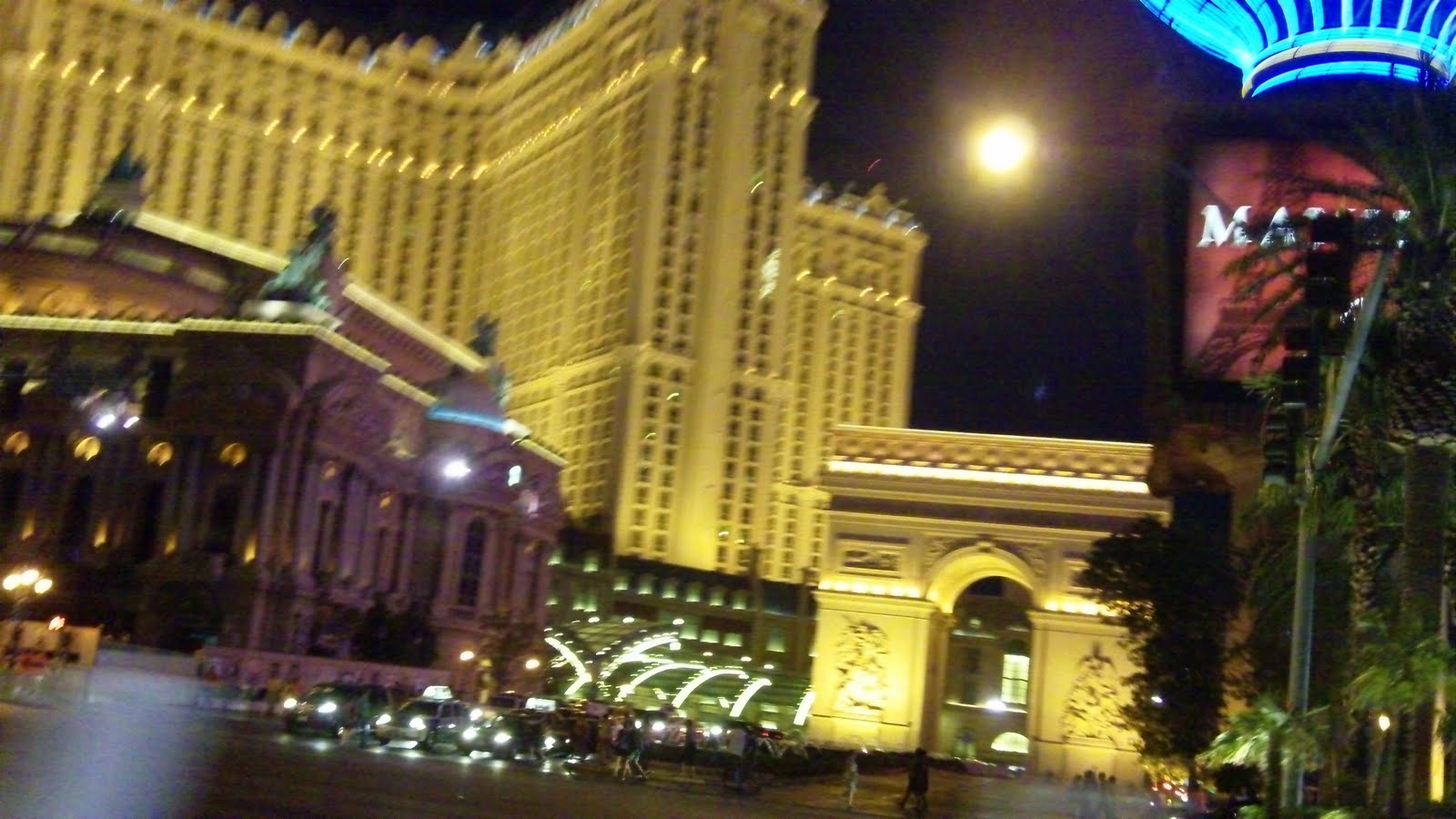
libros de manga para aprender estadística, física y biología molecular insectos gigantes que se pasean por los interiores de los hotelesy cada hotel es un despilfarro de contracultura: está la torre Eiffel, el arco del triunfo, las pirámide de Luxor, la Esfinge, el Capitolio rumano, el Foro, juegos de agua voladora en pleno desierto en el Bellagio conocí a John Sundman, un autor de ciencia ficción cyberpunk que escribió, pionero, sobre nanomachines que hackean cerebros en 1996 y encontré algo muy curioso en la primera página: John marca que hay una cita de Beatrix Potter encripatada en el libro, y a quien la encuentre le enviará un cheque por 25 dólares. No es genial? Adiós a los crímenes de la intertextualidad conocí a un hacedor de virus mexicano, volcado al análisis de malware para el bien... y fuimos a Circus Circus en honor a Hunter Thompson y su abogado samoano :D (how much for the monkey how much for the ape??) La alfombra que cobra vida es la misma! yo acariciaba la idea de que nos casara un chimpancé vestido de elvis en una de las chapels, pero no se materializó... espectáculos de primera línea encontramos el equivalente a mundo bizarro de vegas: frankie's tiki room, cual locación de david lynch -the Slow Bar en blue velvet! canales venecianos con agua y gondolieri que te cantan dentro de un shopping-hotel, The Venetian, under Truman Show skies
tarantino-worthy scenario: The PepperMill, un restaurant 24hs geñal and why the title of the post? (thanks John!!)
yo tomaba cherry cokes... (parece un título de aira jajaj)