It's the last Sunday of November. I have been feeling rather down today -- perhaps I am just tired from the previous night's frenzied partying -- that not even a splendid hay ride in a beautiful Iowan farmhouse can mitigate it, and everything to me now seems to run with forbidding shadows. Some things are even hateful in varying degrees. The full capacity of this cafe, for example, when on ordinary days I delight in seeing the constant traffic of interesting faces. And the fact that it's cold outside. There's also my use of the word "mitigate," which I find utterly pretentious, and I hate it. So is my use of the word "utterly." It seems that in this down time, I have learned how to perfectly cannibalize myself with little irritations.
I use a lot of excuses, don't I.
The real reason is the fact that there is something inevitable that stares me at me now: going home. How do you go home after Iowa? After the International Writing Program? But I am, all of us are. We are leaving in barely three weeks, and I don't think I'm ready to go back to my old life just yet. And yet, there are already missives from and of home that are reminders of this inevitability: emails from family and friends, announcements from work, and the constant moans by O Thiam Chin every single day that this is his "last Friday in Iowa City," his "last Saturday in Iowa City," his "last Sunday in Iowa City." I keep mum, always in that posture of denial, but in my head I tell him: "I am counting out my last days, too, and I am sad."
Amilcar is already gone. So is Najwan. You can see how sad most of us are. We try to hide this silly sentimentality, of course, with smiles and small talk and good cheer and drunken parties -- and sometimes, for some of our men here in the IWP, with a slinky black dress or women's lingerie for a Halloween night's excuse to let our hair down. Last night, at the ghoulish gathering at the Merinos', you could feel that pull for camaraderie among many of the writers in the IWP. There was an acknowledgment in the air that we were indeed counting out our days, that we were saying our drawn out goodbyes in whatever form we want them to take, that we were probably not going to see each other again but that we were glad that, for more than two months, we were blessed with their friendships, their capacity for taking us into their lives and making us part of them.
I will miss Ghada's smile, for example, and her constant protests about her cheerfulness. I will miss Pola's wildfire presence, the way she comes into every room and commands everybody's attention. I will miss Touche's playful gravity, and his conviction that he is always the most beautiful person in the room. I will miss Andrea's sudden bouts of laughter, and his mission to photograph himself in every single spot in the United States. I will miss Mr. Kim's quiet and calming presence -- and his totally terrifying Jigsaw Halloween mask. I will miss Edgar and the way he walks around with the security blanket that is his bag. I will miss Coco's quiet air, the way she talks to you like you are the only person in the room. I will miss Solvi's tallness -- and his wig and lingerie. I will miss Christopher's anecdotes, and the animated way he tells them. I will miss Chandrahas' impeccable sartorial sense and his capacity for elegantly working the room. I will miss Milosz's secret rock star wish and his electric guitar. I will miss being a visitor in Marjia's universe, and the way she can belt out every single song in The Rocky Horror Picture Show. I will miss Laura's delightful accent, and her Gabriel. I will miss Turusbek's dancing, and his booming voice. I will miss Billy’s hand gestures when he talks passionately about something. I will miss Farhad's Cambridge accent, and the whiplashing wit he carries around with him like a weapon of mass distraction. I will miss Michael's giggles and his mission to see birds, of all sorts. I will miss Thiam Chin's hyper nature and his pickiness. I will miss Phoenix's gushing about film. I will miss H.M.'s swagger, and his allergy to the afternoon sun. (Or just the sun, period.) I will miss Amilcar's silence, the way his smile seems to just say everything. I will miss Hinemoana's quirkiness and deep soul and Halloweena costume. I will certainly not miss Ismail's milkshake addiction, and his obsessive fascination for Twinkies and bookstores. I will miss Albana's groundedness, the way she makes you feel at ease around her instantly. I will miss everything about David, that darling man. There are the other writers, of course, all thirty-eight of us, each with a piece of memory of each other. Truth to tell, we only have these scant impressions of each other to work with, because two and a half months are never really enough to know anybody. But it is enough to say that given the little time that we've had, we gave the world to each other -- and made Iowa City in the beautiful autumn of 2010 an impossible place and time to forget in all our lifetimes.
Due to my uncanny resemblance to the American politician, author, speaker, singer, and member of the GOP, Governor of Alaska Sara Louise Palin, I'm considering dressing like her for this Halloween in Iowa, my first all hallows eve in The Land of the Free. I can certainly do the hair, and sport her light glasses and a bright colored 2 piece (perchance a Hockey Mom tee when things get boozy); the rest is, as in politics, entirely debatable as whether I could go for Miss Alaska and win, too. The thing is: not enough. I need a baby prop. I'd like to go as Sarah Palin holding little baby Trig, her down syndrome offspring who comes with her to the political rallies (see below), and it's not easy, as some could have wrongly guessed, to find small baby props featuring down syndrome here in Iowa. Ismail from Nigeria is suggesting Andreas from Indonesia to play my son, and yesterday, I have chased Andreas at the reception at US Bank asking him wherther he would like to be my son (grandson, alas, but I'm not exaggerating accuracy, I'm Palin f'christ sakes). Andreas finds the idea so horrific that it's good. But he hasn't consented to our common genes yet. A decision needs to be made in the coming hours... oh time, oh witches.
La red social se despliega sobre mitos antiguos. Navega la paradoja de crear una red de amigos, y quedarse solo en el mundo. Es la historia del revolucionario que se enfrenta al poder tradicional (los hermosos machos alfa Winklevoss); es el cliché del niño judío resentido que carga sobre las elites cerradas. Es el pequeño Asperger que se lanza a construir una máquina imparable cuando su novia lo deja, en la primera de muchas escenas geniales (“Vas a ir por el mundo creyendo que las chicas no te quieren porque sos un nerd. Pero en realidad, va a ser porque sos un imbécil”). Y es la novela rosa de la filosofía de negocios norteamericana, contada con diferentes personajes, lugares, momentos. Y una estudiantina cruzada con el nuevo género de la narrativa empresarial (la deriva del arte en la época de la reproductibilidad capital: las creaciones son empresas). Con ritmo adictivo y diálogos brillantes, David Fincher y Aaron Sorkin crearon un nuevo clásico juvenil, con una inteligencia que recuerda a la dupla clásica de Joseph Mankiewicz y Ben Hecht.
La red social también cuenta cómo la historia del rock (su estirpe reventadora de hoteles y paradigmas) devino en la era de las empresas startup (ahora se revientan los servers, los sites...). La red social recrea el cuento dorado de la cultura garajera del software. El mito sagrado que inicia la travesía hacia la conquista de Silicon Valley cuenta entre sus bestias evangelistas a Steve Jobs, Bill Gates y los Google Boys programando como monjes en sus cobertizos californianos, hasta darse cuenta de que tenían billones potenciales entre manos. Esta vez el encierro primigenio se encuentra injertado dentro del ambiente ultra tradicional de Harvard. Es la historia de un chico que, con menos de mil dólares, crea un código –y su sucedáneo en la era del capital: una compañía–. Es como cuando las bandas empezaban a sonar en reductos underground que sólo los connoisseurs sabían olfatear; ahí entra Sean Parker (interpretado por un exacto Justin Timberlake), que funciona como un manager que descubre a un artista y lo conecta con las discográficas que quieren invertir en él (la breve impasse de Peter Thiel, temprano inversor, como si fuera Virgin en sus días de gloria). De hecho, Parker (fundador de Naspter) se cuenta entre los capitanes digitales de los que desbancaron a las grandes discográficas. Como cuando entran los managers, ocurren cambios en la banda original; pero no necesariamente porque “se venda al sistema”: el sistema es lo que se crea (las drogas se siguen consumiendo sobre la piel de las chicas).
La red social (siempre hablamos de la película y el modelo) consolida al héroe nerd que se emancipa de los papeles secundarios, como si el arco épico comenzado en La venganza de los nerds culminara en el estupendo Zuckerberg de Jesse Eisenberg hablando rápido, escupiendo bits de palabras, enfrascado en la pantalla, aislado, “wired” (conectado). La filmografía de las estudiantinas norteamericanas –el estudio antropológico más extenso sobre la tribu nerd– muestra el ascenso de los nerds en la carrera darwinista. Su paso de minoría oprimida a clase dominante culmina triunfal con la controversia que pone en escena la red social; desde el punto de vista de las comedias de estudiantes, el año 1986 corresponde a la Primavera de los Pueblos. Desde La venganza de los nerds a Karate Kid, los años formatorios del cine pop corn de los ‘80 establecieron un relato épico de la lucha de clases inscripto en el aula: el nerd, el animal omega, de pronto triunfaba sobre los machos alfa. Los hermosos gemelos Winklevoss esperaban alquilar el cerebro de Zuckerberg para que les hiciera un site donde capitalizar sexualmente el status de Harvard en un site de citas. El joven Zuckerberg accede (lo hace para hacer repuntar su reputación después de convertirse en el nerd más odiado del campus), pero demora fatalmente el lanzamiento del site de los gemelos, y crea el código para lanzar su propia idea. La técnica se imponía sobre los privilegios del nacimiento y la clase.
La red social combina lo más augusto y competitivo de ambos mundos: la figura del rebelde revolucionario con el vector inhumano -mitad computadora, mitad niño- de la competencia absoluta permitida por el paradigma de la innovación. Después de todo, las traiciones entre aliados forjaron la innovación tecnológica que habita ubicua nuestros hogares, a la que hace rato hemos invitado a quedarse: Bill Gates tomó la idea del software con ventanas de Steve Jobs, que a su vez la había tomado prestada de Xerox, y Steve Jobs estafó a su primer socio, Steve Wozniak, vendiéndole una parte 7 veces menor. La parábola del Zuckerberg Judas lo suma a la serie áulica y cristaliza su liderazgo. Porque el paradigma de la innovación en la era del capital no es sino el avance del todo vale sobre la tradición y las ideas públicas o privadas para crear “un imperio sin límites”, para traer una frase de la Eneida que a Zuckerberg le gusta citar en las reuniones con sus jefes de producto en sus oficinas de Palo Alto.
La red social está llena de detalles deliciosos, de personajes que se delinean a partir de bombachas con insignias Ivy League, a Zuckerberg llamando “Winklevi” a los gemelos, porque le gusta el latín y sería la manera correcta de adjudicarles el plural. Uno de los aciertos es que nunca se trata de la inocencia del nerd atrapado por la ambición del dinero (no es Wall Street 2.0), y que el drama permite a todos contar su parte; como todo en la red social, lo que está en juego es un juicio sobre una persona (en este caso, el creador del site). El juicio es injusto: los hermanos no merecen más que un par de cientos de dólares (no se patenta una “idea”, sino una tecnología), y lo que queda en liza es un desafío al paradigma creativo de la colaboración: qué ocurre cuando las ideas se desarrollan dentro de una red (social), y pasan de su forma idílica a la fase más idílica de negocios rentables. Otras películas sobre el tema (Startup.com, Pirates of Silicon Valley) no llegan a ser bocetos del tratamiento de artista que Fincher y Sorkin le dan a este mundo.
Lo que está en juego es, como en el arte, la habilidad de leer, de esculpir la forma del Zeitgeist contemporáneo: no es una obra, sino una plataforma que invitara a la ansiedad, la agresión controlada y la búsqueda de afecto ficticio. La primera acción es hacer caer el servidor de Harvard, a través de un aparatito misógino que permite hacer rankings de chicas. Toda la oscuridad de Facebook está en ese nacimiento violento; sin esa matriz de resentimiento, ansiedad, tic facial, no existiría Facebook.
Conferència de premsa de presentació de Fet a Amèrica a la seu de Casa Amèrica Catalunya, només hores abans de començar l’esdeveniment, organitzat per la nostra fundació, en col·laboració amb el Col·lectiu Fu i l’Associació Fringe. Aquesta trobada es celebrarà entre el 18 i el 24 d’octubre com festival internacional de novel·la contemporània en llengua castellana, hereu del Fet a Mèxic (2007). Aplega a Barcelona quinze autors llatinoamericans que, en la seva majoria, son inèdits o poc coneguts a Espanya.
Un dels objectius del festival consisteix en constatar que la narrativa llatinoamericana de qualitat va més enllà de l’obra publicada aquí. Fet a Amèrica contempla taules rodona, trobades amb professors i estudiants, reunions amb lectors i una cita a Menorca amb clubs de lectura (veure els dossiers del festival en altres apartats del nostre web).
A la conferència de premsa s’hi trobaven presents la immensa majoria dels autors que protagonitzaran les jornades, així com els seus organitzadors. En primer lloc, prengué la paraula Marta Nin, adjunta a la direcció general de Casa Amèrica Catalunya, en qualitat d’amfitriona del festival, qui donà la benvinguda als escriptors i situà l’origen de la iniciativa “en l’èxit de Fet a Mèxic, malgrat l’enorme feinada que generà aquella experiència. El nostre equip va decidir fatigar-s’hi encara més i extrapolà la idea d’un país a tot el continent. L’esperit americanista de la nostra Casa consisteix en recolzar aquesta mena d’iniciatives i convertir-les en realitat”.
Una de les organitzadores externes de l’esdeveniment i membre del Col·lectiu virtual Fu, Fernanda Álvarez, situà la inquietud pel Fet a Amèrica naixent fa cosa d’un any “quan ens preguntarem quina literatura s’estaria fent a l’Amèrica Llatina fora dels circuits comercials. Férem una investigació entre amics, llibreters i editors. Aconseguirem recolzament d’algunes editorials i després d’emmagatzemar 215 autors de 21 països, escollirem 19 amb les que vam muntar el programa. També, vam voler treure’l de Barcelona, pel que vam aconseguir complicitats a Olot, Mataró, Girona i Menorca. Cerquem arribar a estudiants, professors i lectors en general. També, posar en contacte als propis escriptors, perquè coneguin millor les seves veus i pensaments literaris. Gràcies a Barataria, hem editat un excel·lent treball de Paz Balmaceda en el que aplega les converses entre ells, trencadores de fronteres de tot tipus, diàlegs intergeneracionals de diferents escriptors amb diverses influències i diversos processos de creació”.
Lolita Bosch, una altra de les inspiradores del procés, participà a la selecció d’autors i l’empenta a Fet a Amèrica després de constatar que “Fet a Mèxic havia nascut de l’amor i la rebel·lió davant la situació d’un país i resulta un èxit inesperat. Estic convençuda que la lectura val molt a les persones i aquesta creença queda palesa encara més a l’Amèrica Llatina. Allà, un llibre és capaç de transformar la vida d’una persona. Per això, estem immersos en projectes com la donació de llibres per a la presó de Tramacúa a Colòmbia – en la que també hi col·labora Casa Amèrica Catalunya- o una altra idea inspirada en la força i honestedat de la periodista mexicana Lydia Cacho. Volem fet coses que serveixin, que siguin reials i tangibles. Ser lector és una sort i un privilegi, uneix als demés. Busquem fer quelcom per la societat a través de la literatura, aquest és el nostre objectiu”.
Fet a Amèrica’ arribarà via Internet a Mèxic, Perú, Colòmbia, Xile i diverses universitats dels Estats Units que s’han interessat pel seu programa d’activitats.
Writing Workshop in English, Fiction and Non-Fiction
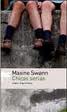
coordinated by [enormous author and darling friend] Maxine Swann, the pen behind Serious Girls (Chicas Serias), Flower Children (Niños hippies) and The Foreigners (Spanish translation forthcoming). Maxine is a Sorbonne-educated (with a thesis on Proust's style) adorable new yorker re-locating in BA, and she has directed writing workshops at Columbia University and the New School in New York City.
The workshop will consist of 8 weekly meetings over a period of 2 months, beginning the week of October 18th. In Palermo: Charcas & Bonpland
contact Maxine via Facebook or at maxine.swann@gmail.com
btw, this is Maxie and moi, in the Argentine cover of her 1st novel :D
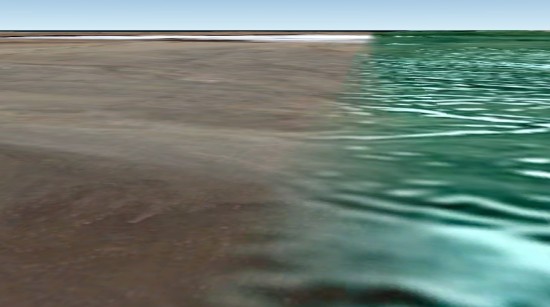
Like all good tapestries, Google’s temporal tissue tells stories. In Morocco, a field’s circular irrigation patterns reveal the seriality of blooming and browning: Borges famously demonstrated the uselessness of a map at the scale of one to one; in the fragmentary short story “On Exactitude in Science,” he imagines its users becoming just as lost in the map as they were in the world. “In the western deserts,” he tells us, “tattered fragments of the map are still to be found, sheltering an occasional beast or beggar.” from Mathew Battles, TimeZones
te escribo aquí porque no encuentro tu perfil en Facebook. Me agregaste como amiga, tras yo pedírtelo, y una semana después has desaparecido. Me pregunto si la razón de ese hacer mutis por el foro no está directa u oblicuamente relacionada con la actitud de Johan Van Vliet en tu novela sobre sus Transmisiones Yoicas. Quiero decir si no habrá sido la amigable ferocidad de tus miles de agregados lo que te haya empujado a tomar la decisión radical de borrarte del mapa, o de interponer entre tú y ellos —entre tú y nosotros— la negrura de un telón de scripts administrados por los nerds de Palo Alto. O quizá sólo sea una estrategia cinegética tuya: huir a una selva tropical que te sirva de atalaya para desde allí, oculta entre la espesura, observarnos, analizarnos, investigarnos: teorizarnos. Pero me atrevo a decir que tienes miedo, Pola. Miedo de que uno de estos días cualquier taxista que haya leído decenas de veces El guardián entre el centeno te recoja en una esquina lluviosa de una ciudad del cono norte del mundo. Así los taxistas, así la fama.
Puede que hayas mantenido con ese mundo una actitud equívoca. O quizá el mundo se haya formado una imagen errónea de Pola Oloixarac, por culpa del reflejo público que emanan tus actividades de savant disfrazada de aterpoppy cultural. El canto, la antropología, la escritura, la filosofía, tu argentinidad no eran razones suficientes para catapultarte al Hall Of Fame en que te encuentras. Pero si a ésas les unimos tu condición femenina, tu inteligencia y tu natural belleza, Pola, obtenemos para el terreno artístico lo que para el fútbol es Diego Forlán (Messi es mejor, pero algo más feo). Algo muy injusto, desde luego. Injusto para los hombres, para las feas, para las otras guapas, para quienes escriben y para quienes leen, para los auténticos nerds, para los que no leen ni escriben ni lo harán en toda su vida, para toda esa alteridad insignificante. Injusto también para ti, Pola. Porque leo críticas de tu novela y en todas ellas sus redactores no han evitado la tentación de significarte en alguna o varias de las categorías que he mencionado. No pueden valorar solamente tu libro: también tienen que sopesarte a ti o algún aspecto tuyo, alguna característica o aptitud extraliteraria, la que sea. La envidia los define y mueve. Dijo Montaigne —tantas cosas dijo—: “Se ha de rebajar el oro mediante algún otro material para adaptarlo a nuestro servicio”. ¡Oh, Pola, son tan predecibles!
Cuando te editaron en España y leí las primeras reseñas de Las teorías salvajes (que tú abreviabas en tu espacio de Facebook con un encantador LTS), fui corriendo a comprar el libro. Lo devoré en una noche insomne en la que eché en falta la costumbre del mate y los puchos. Tan inmenso es, Pola. Tan bestia cabría decir. Me enamoré de inmediato de la teoría sobre la que armas la narrativa y las disquisiciones ensayísticas insertas en LTS. Tú, en un libro de bolsillo —un hardcover de luxe con tamaño de paperback—, zanjas las motivaciones que me hicieron caer rendida a los pies de mi profesor de Estética en la facultad, y otorgas por fin, a través de Kamtchowsky, un sólido sentido poético al Ser nerd, sin los lloriqueos portuarios de Junot Díaz ni la carga peyorativa implícita en las torsiones de cuello post-universitarias —prosa/prosaica—. Por cierto, ya que estoy déjame que te diga qué grandes veo los nombres adjudicados a los personajes de tu novela. Ese Pabst, con su estar-a-un-lado onanista, interviniendo dialéctica pero no materialmente, cual director de cine que se apropia escenas ajenas (en tanto creaciones espontáneas por él incontrolables) a las que su mera observación sesgada dota de sentido crítico. La propia Kamtchowsky, que fusiona las nociones del empirismo kantiano con la faceta de activista político del otro Chomsky; y que también trae a la memoria la inhabitabilidad de la capital de Kamchatka. Andy y Mara, reciclando la Arcadia en impasses lisérgicos de trascendencia adulterada. Rosa Ostreech, cuyo apellido, como contraposición entre la belleza descrita del personaje (y de su nombre propio) y la fealdad canónica atribuida a las avestruces, funciona como un oxímoron terrible. Qué decir de Van Vliet, siendo éste uno de los más reputados comerciantes mundiales de flores, y conociéndose tu amor por las orquídeas. Nada es casual en LTS. A cada detalle le has transmitido tus afinidades, tus conocimientos, tus teorías, tu estar-en-el-mundo, tu yo. Diría que nada es arbitrario en ti —y perdóname si crees que estoy cayendo en lo mismo que critico en los demás: en el secuestro del sujeto con la excusa de analizar el objeto; sigue leyendo y verás que no es así—, pues hasta el nombre de tu blog, que existe fuera de la ficción y mencionas en LTS, tiene resonancias asociadas a las atribuciones con que la alteridad cincela tu imagen: el magazine de Melpómene —cortazarianos cogotudos—, la mujer que lo tenía todo pero no era feliz. ¿Qué es necesario, pues, para ser feliz? ¿Que nos falte (de) algo? ¿Algo alcanzable con cierto esfuerzo pero que, cuando se consiga, el premio adherido al código de barras, su bonus, sea la pérdida de parte de lo que ya se tenía o el establecimiento de nuevas metas? Toda ganancia implica una pérdida, dijo un Anónimo. Puede que tú hayas perdido una intimidad que no sabías que tenías, que nadie sabe que posee hasta que ésta desaparece por inundación de los otros. Consuélate con el mal ajeno: yo, a causa de Las teorías salvajes, he perdido mi trabajo.
I'm becoming a Muslim (*) and my friend Ghada, to the left, is taking me under her wing this is the fundamental style when you go to a rodeo on September Eleven, and there are priests in Florida burning Qurans. The word from the organization was "we can't protect you", and Ghada thought that, worst case scenario (burning her alive?), it would give her something to write about. A terrorist strategy ensued: Here's Ghada with my NASA cap + American Apparel hoodie... suddenly a redneck in style!
alas, we wanted to dance, and hence, the prospect of a gay bar (the one and only in iowa city?) was our immediate Grial. lovely Farangis practically threw away ahmadinejad just by swinging her hips the Iranian revolution and this young man approached us, to greet us for my conversion into Islam, style American dollars protruding from his zunga, he squealed: You guys! You were last night at Jimmy Sandwich, I work there! Veggie club, right??
(*) the image was cut to support the cause of the Iconoclasts
1) Sumar esfuerzos para disponibilizar datos públicos, modelarlos, y visualizarlos.
2) Unir capacidades complementarias entre desarrolladores, expertos en visualización, y profesionales de las ciencias políticas y de la administración pública, con el objetivo de diseñar y resolver problemas de acceso a la información pública.
Método:
La propuesta es armar equipos con estos distintos perfiles y encarar proyectos que, basados en fuentes de datos públicos, puedan mostrar por ejempo las compras y gastos de un municipio o ministerio, analizar la ejecución presupuestaria de una repartición pública, interpretar las votaciones históricas de una cámara legislativa o encontrar patrones de análisis en las audiencias mantenidas por distintos funcionarios.
Organización: El evento comenzará a las 10am. El primer día se presentarán todos los proyectos para que cada uno elija en cuál desea trabajar. Durante los dos días habrá charlas informales y presentaciones que ayudarán a entender mejor los problemas que se intentan resolver. Al final del segundo día se mostrarán los proyectos finalizados y se subirán a un servidor para que puedan ser de libre acceso.
Para inscribirse, sólo hay que enviar un e-mail a contact.garagelab@gmail.com
Estarán presentes en este Hackathon, entre otros :
Desarrollo, Modelado y Visualización
Manuel Aristarán, Programador, Músico, y creador de gastopublicobahiense.org. Gerardo Richarte, Programador, CoFundador de Core Security Technologies Mat Travizano, CEO de Binaria Labs José Orlicki, Programador, PhD Candidate en ITBA Renzo Carbonara, Programador en The Whuffie Bank
Eduardo Mercovich, Fundador de Inspiro y Manager de Usabilidad en Mercado Libre Ernesto Mislej, Fundador de 7puentes, experto en visualización de información. Enrique Stanziola, Coordinador del Taller de Diseño Interactivo Juan Lanus, Desarrollador y experto en usabilidad.
Politica y Administración Pública
Diego Pando, Director del Programa de Gobierno Electrónico UdeSA. Germán Stalker, Consultor en temas de Transparencia Gubernamental. Gonzalo Iglesias, Consultor en Políticas Públicas. Marina Calamari, Miembro del Programa de Gobierno Electrónico UdeSA Marcelo Leiras, Director de la Carrera de Ciencia Política y Relaciones Internacionales, UdeSA. Alejandro Artopoulos, Profesor/Investigador, Depto de Administración, Escuela de Educación, UdeSA
esta nuit mis queridísimos Evelyn Galiazo, Mariano Dorr y Ariel Schettini comparecen ante mi amiga la princesa Cecilia Szperling. Soy absolutamente fan por númeras razones y todas ellas literarias in extremis, es decir, amorosas. Baste mencionar que me vine a USA prácticamente para poder conseguir el libro de poemas de Ariel, Estados Unidos, que en el río de la plata ha sido devorado en su integridad. Predigo mucho paparazzi en la puerta, pero no os dejéis amedrentar.
by Pola Oloixarac for Iowa Library City Library Reading: IWP Panel Series
The matter of comedy has deserved very serious treatment throughout the life of books. This of course includes cinema as well, and I'd like to share with you a 20th century definition, by the American comedian Woody Allen.
The horse, channeling Alan Alda's voice, brings it forth: If it bends it's funny, if it breaks it isn't. Woody was hired to depict this grand man, yet by making a comedy out of a comedian, he breaks the pact, and ultimately gets fired. We may suppose Alan Alda was asking for the bending quality of representation, to get the kind of self he was looking for. Instead, in Woody's book, the definition reverts: If it breaks it's funny, if it bends... well, it just makes Alan Alda happy, and where's the fun in that?
Mutable, ever-changing definitions of funny can vary violently across eras and authors, can twirl against each other and even take themselves as their laughable target. However, the viral power of comedy holds a particular strain, satire, whose almost romantic build-up is closer to timeless epic. For satire is the genre of the little people against the giants (or the place where Giants and little people live together, as in Swift's Gulliver’s Travels). It's also the classical genre for narrating the rebellion of women: Shakespeare's comic heroines and Cervantes' difficult ladies are escaping marriage, are playing with men's minds, and trying to have a life (if not a room) of their own. Satire has also starred in roles as morality's bravest ally, more often than it has befriended libertines. Before society grew accustomed, or trained, in finding aesthetic pleasure in the tale of its own perversities and excesses (that is, before the trend of social realism came to embed the moralfinesse of the culturati), satire was probably the most powerful technology for twisting the arm of the contemporaries. You could only get away with your pungent criticism to society by way of bringing tones of fun. You needed to make them laugh to get your point across. Satire, and her mischievous little sister, Parody, have gone a long way, and have always shaped themselves by following the contours of power –in order to break it. They are experts in finding the vulnerabilities of power and breaking into it, filling the gaps with new meaning. Moreover, as a master satirist may attest, only imminent breakage is proof of worthy writing. Thomas De Quincey considers, in Murder as one of the fine arts, that “and against Locke's philosophy in particular, I think it an unanswerable objection (if we needed any), that, although he carried his throat about with him in this world for seventy-two years, no man ever condescended to cut it.”
Yet, with all its manifold richness, there is method in its madness. Take a look at a classical Marx brothers bit. A molecule of their humour shows the gap, the cut between worlds. A says give me a break! And B pulls a brake out of his pocket. Comedy shows the gap between language and the world, between ego and its mirrors. It shows that there's nothing natural in what we take for granted, and that the consolidated powers we've grown to consider part of the natural landscape are artificial, and therefore, because their engineered whims are reflections of men, can be bitterly comical. It comes to show that the norm is made of disjunctures, mistakes, discrepancies, the ruins of old wars that have become naturalized. And then suddenly you are part of the scene, staring at the invisible carrot that had been hanging right between your eyes. By breaking the pact with the status quo, comedy ultimately reveals the political and ideological.
But perhaps this is an all-too-romantic definition, a hard one to maintain these days. Because today, the ideological norm is to be happy. Cheerfulness is encouraged, and spiritual darkness frowned upon. Laughter is even part of the medical discourse, and a saturnine character, a sign that something is wrong. Laughter (like sex) is empowering, the sign of a healthy, successful, morally valuable person; sadness is bad for you (and probably causes cancer). Comedy is, therefore, the underlying ideology, the global script with the mandate. The proliferation of comedies of all sorts gives us an idea of a certain soothing quality of comedy that blatantly flatters the hidden rules that we don't question, to help people live with a number of acceptable problems and to provide them with a script of possibilities. Romantic comedies, office comedies, teen comedies, terror comedies, are the hysterical flavors of the American ideology that always need to turn things into a smile, into a “positive” attitude.
At the same time, our times favour the proliferation of a newborn class of humour and communication. Parodies: we see them all over, breaking into previous representations, breaking out into viral swarms: a moving, living form that takes on the electronic lives of online joie de vivre. Walter Benjamin (born under the sign of Saturn, as Susan Sontag described him) held that, in the era of massive reproduction, “copy” meant the loss of the aura; that mass-ification of works of art ultimately kills whatever traces of the author lingered in them. Walter Benjamin was, of course, making a critical point about American capitalism, and it's not difficult to see how the battle turned out. Eventually, copy seems to have gained an aura, by way of parody. Every person could repeat, mimic, the former representation, and hence attach his or her own subjectivity to the parodied object. So, OK, the Author with capital letters got lost in copy, but now the parody-maker could turn into an author by the thousands. In a way, it's as if parody had taken a Greek turn. Aristotle defined tragedy as the opposite of comedy, as the ongoing staging of known facts that happens to noble people. So people in Greece went to the theater to see Oedipus, and everybody knew how the story went, everybody knew he was going to turn out blind, yet they would scream to the actors in the stage: “Don't go there Oedipus! She's you mom!” only to watch how the dreaded ending inevitably, took place, to the repeated shock and awe of the viewers. And the same happens with the most widely watched genres of our times: pornography and parody. In parody, we see the endless list of people repeating patterns, and taking pleasure at mocking others. In pornography, we see the on and on unfolding of the same events, the infinite series of imperceptible variations on the same mythical scene, drawn to the limits of exhaustion, until the crucial ending: inevitably crowned by the money shot. Pornography admits no surprises; and parody, no real subjectivity. There might be juissance, but no further attempt against the ruling powers.
So, the question I'd like to ask you and myself on the topic of satire's global reach could be: how do we keep comedy a critical endeavor, without losing a sharp edge? Is it possible to be defiant to powers without being an intellectual clown? Or: which is the all encompassing narrative that hasn't been hacked by literature? Is it possible to create “pure” satire, to work directly on the level of the syntax, to operate directly on the signs –in order to break them?
In my novel, “The Wild Theories”, there's a special attack designed to hack Google Earth. The characters throw a party to launch their attack, and include specific instructions for anyone who wants to partake in the breakage. (So as to avoid legal charges of inciting criminal behavior, I, as an author, am one of the guests to the party: I, the author, didn'tmake the hack). The hack is called DNS cache poisoning, and exploits a pretty interesting vulnerability of the architecture of the internet. There is a flaw in this architecture that lies, precisely, in ideology. The openness of the internet, or what we call openness, lies in a few computers that later translate the number of other computers into addresses (IP addresses). These few computers centralize information, and can easily track it: there is a chain of command of the authority that gives each computer one name for all to follow. If the web had, say, a different architecture where all the nodes connected with each other, a true peer to peer connection, information would not be hosted somewhere for scrutiny, the packets would just flow horizontally from person to person. There would not be pyramidal powers that oversee the packets, the subjects. If this were this case, Google Earth would remained unhacked by literature, but this is not the case. Vint Cerf, also known as one of the founding fathers of the internet, has said that this vulnerability is one of the things that the founders didn't see coming and that they can't fix. In the literature of hacking, this flaw had been duly noted on an advisory written by EK and Wari in 1997; however, the exploitation of the flaw, that is, the re-writing of the procedure specifically for the maps came ten years later. DNS cache poisoning is about the poisoning of images. In the technological side, it allows the hackers to fill up the landscape screen with all the sentimental/historic/trivial garbage they can think of; ultimately, the representation of chaos and memory in a fluid present hacked the objective, quantified, all-encompassing narrative of Google.
Our interactions are based on this architecture marked by ideology, which only becomes visible once you break it, once you show the gap. It was ideological matter I was hacking into. Operating on signs, breaking their syntax and meaning, the mutation of literature into informatic code, literally executed by the end of the book, remained political. To poison the tissue of constructed reality had mighty predecessors: the imps, the little creatures of Saxon folk that enjoyed creating chaos in the world of men, and that live on in the root of impish, and in the rootkit of power hacks and every code that revives the ancient promise of language: to utter words, that later happen and become real. In the strain of epic satire, it wasn't merely a way to tag an EPIC FAIL to the biggest giant; it was about words and their meaning, and what ultimately makes writing.
This essay is dedicated to the lovely Clara Masnatta.
Iowa City Public Library Panel Series Fridays Noon - 12 hs
09/17 "Satire's Global Reach" • David Hill. New Zealand • Pola Oloixarac, Argentina • Maryia Martysevich, Belarus • Farhad A.K. Sulliman Khoyratty, Mauritius • Najwan Darwish, Palestine
Mi amiguísimo el maestro Etián Insinger (mi pal en Lady Cavendish) está reversionando el himno argentino con su Laptork band, en cahoots con herr Fabián Kessler, en la obra HNA. La obra tiene sonidos preprogramados que se activan con el movimiento: aquí, el robot de Laura Santillán se activa con una reflexión recursiva sobre el fenómeno de *la compubanda*:
Taller de lectura de cuentos estadounidenses (1914-2009)
Coordinado por Santiago Llach
***
Programa
0. Cuento, Estados Unidos
Novela, nouvelle, relato, cuento. La short story: un formato para la invención de un imperio. Los estados anímicos de la unión. La pax filmada. Los founding fathers de la madre literatura.
Cuentos de Katherine Anne Porter, Ernest Hemingway, Billy Faulkner, Francis Scott Fitzgerald.
1. Trenes, autos, teléfonos (1914-1945)
El fin de algo. Los paisajes, las ciudades: la literatura, industria de la nostalgia para una economía de los servicios. Cross a la mandíbula: maquinando la sociedad del espectáculo. Euforia y depresión en la cultura: psicoanálisis de una nación. Los fantasmas que vinieron del sur. Aborto, menstruación y otras cosas de mujeres. Héroes venidos a menos en una democracia policial.
Cuentos de Sherwood Anderson, Willa Cather, Thomas Wolfe, Ring Lardner, Flannery O’Connor, Dorothy Parker, Carson McCullers, Raymond Chandler, Dashiell Hammett.
2. Americanos a las cosas (1946-1975)
Cómo escribir después de Pearl Harbor: estrés postraumático y literatura. La trama descompuesta de un barroco electrodoméstico. Los rusos y los otros: nervios en las centrales de la información. El lado sucio de la Edad de Oro. Literatura de exportación: soldados confederales en las industrias culturales. Una ficción para la televisión. All you need is pop.
Cuentos de Jerome David Salinger, John Cheever, Flannery O’Connor, John Barth, Donald Barthelme, Thomas Pynchon, Isaac Asimov, Ray Bradbury, Kurt Vonnegut, Isaac Bashevis Singer, Charles Bukoswki, Grace Paley, Eudora Welty y Truman Capote.
3. Megáfonos vietnamitas para la derrota cultural (1975-1989)
Literatura del recorte impositivo. Fantasías de la guerra en las galaxias. La contrarrevolución de las costumbres. La guerra fría interior: adicciones, tramas del suburbio y sociedades anónimas de la vida moral. Jesús es mi superhéroe. Relatos de material plástico y chaquetas militares. Personajes viajando por autopistas.
Cuentos de Raymond Carver, Tobbias Wolff, Hunter Thompson, Ann Beattie, John Updike, William Gibson, Russell Banks, Alice Walker, Joyce Carol Oates, Cynthia Ozick, Saul Bellow, Alice Munro y Lucia Berlin.
4. Cantos de las guerras del Golfo (1990-2009)
Traigan a los chicos a casa: sin guerra no hay literatura. Minorías absolutas. El desierto de lo real y el desierto de lo reality. Literatura becaria: sensibilidades de la era Bush y documentos en la basura de Google. Milenarismo petrolero, gendarmería y retaliación.
Cuentos de Denis Johnson, Chuck Palahniuk, Lorrie Moore, Richard Ford, Elizabeth McCracken, Rick Moody, Miranda July, Gish Jen, David Foster Wallace, David Leavitt, Junot Diaz, Daniel Alarcón y Tao Lin.
Duración: tres meses, del 14, 18 y 19 de septiembre hasta la segunda semana de diciembre Horario 1: Sábados de 11 a 13 Lugar: Crack-up Libros, Costa Rica 4767, Palermo Informes e inscripción: libros@crackup.com.ar / 4831-3502
Horarios 2 y 3: Martes a las 19 o domingos a las 19:30 Lugar: Talcahuano y Corrientes Informes e inscripción: santiago.llach@gmail.com
Friday Sept 3rd: A reading by Brazilian fiction writer Amilcar Bettega and Argentine fiction writer Pola Oloixarac at 5 p.m. Friday in the Shambaugh House, 430 N. Clinton St.
It's only been 3 days here at Iowa, and I'm overwhelmed by delight. I feel I'm in a David Lynch dream.





 Iowa City Public Library Panel Series


